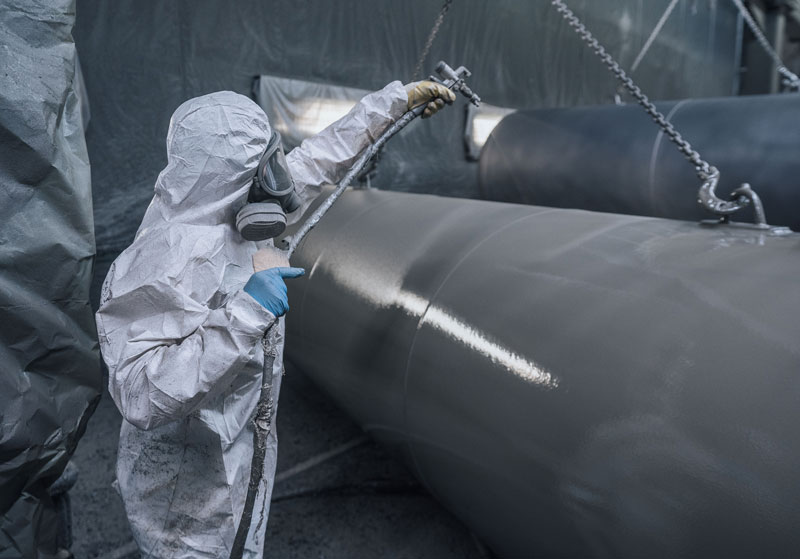
Specializing in heavier paints such as epoxy‘s and two-part urethane for steel protection
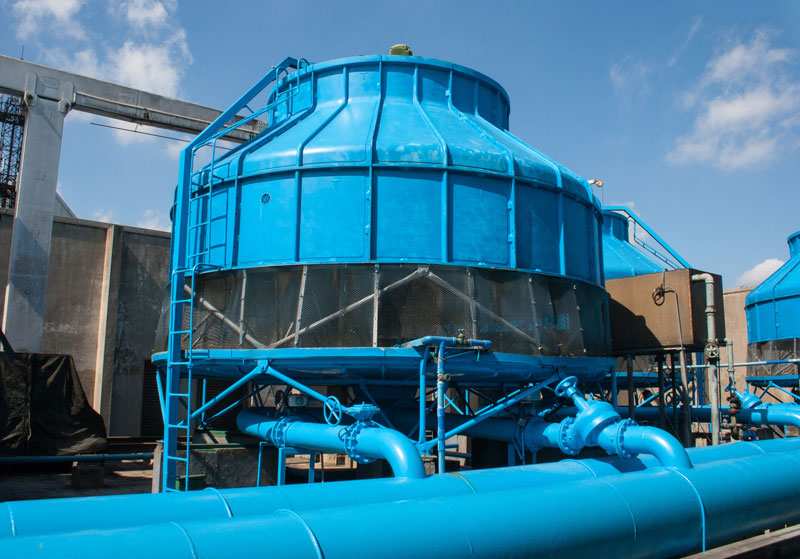
Factories
Warehouses
Bridges
Interior / Exterior
What is Industrial Painting?
Industrial painting is a specialized field that involves the application of protective coatings and finishes to large structures and surfaces in an industrial setting.
This can include things like factories, warehouses, bridges, and other types of industrial buildings.
The main purpose of industrial painting is to protect the surface being painted from the elements, such as wind, rain, and sunlight, as well as to improve its appearance.
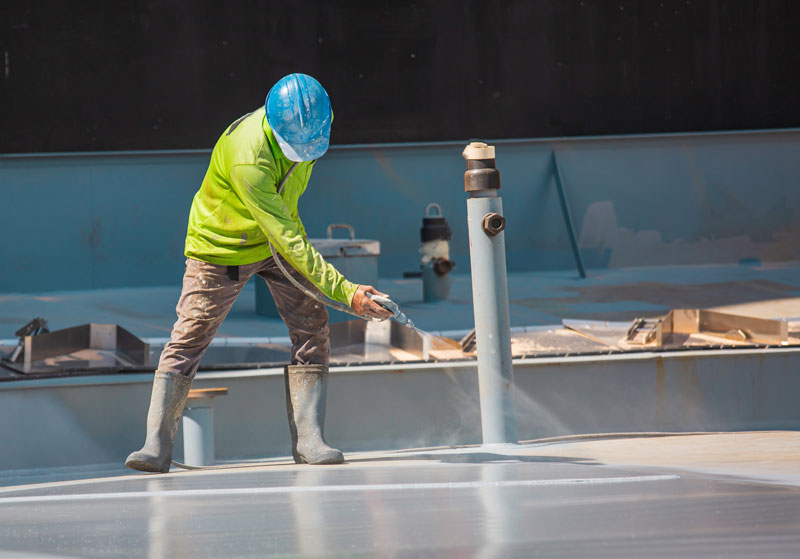
Industrial painters use a variety of tools and techniques to complete their work, including spray guns, rollers, and brushes.
They may also use scaffolding, lifts, or other specialized equipment to reach high or difficult-to-access areas. Industrial painters must have a thorough knowledge of the various types of coatings and finishes available, as well as the proper application methods for each.
They must also be able to prepare surfaces for painting, including cleaning, sanding, and priming, as needed.
In addition to protecting surfaces from the elements, industrial painting can also provide a number of other benefits. For example, it can help to prevent corrosion, which can cause structural damage to a building over time.
It can also improve the overall appearance of a structure, making it more attractive and potentially increasing its value. Industrial painting can also help to reduce the amount of maintenance required, as well as improve the safety of a structure by providing better visibility and slip resistance.
Overall, industrial painting is an important field that plays a vital role in protecting and enhancing the structures and surfaces in our industrial landscape.
Overall, industrial painting is an important field that plays a vital role in protecting and enhancing the structures and surfaces in our industrial landscape.